

Dr. Ghulam Asghar (Asghar Khan)
Assistant Professor
Post-Doc
Other Websites
https://orcid.org/my-orcid?orcid=0000-0001-9917-6054Research Supervision Capacity
About Me
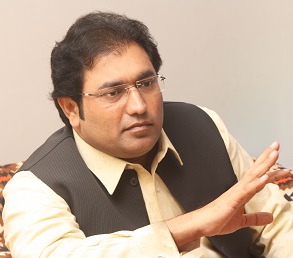
Dr. Ghulam Asghar is an Assistant Professor in the Department of Urdu & Iqbaliat at The Islamia University of Bahawalpur. He has been serving in the department since November 2019. Prior to joining the University, he served as a Secondary School Educator (Urdu) in the School Education Department, Government of Punjab, from September 2009 to November 2019.
Dr. Ghulam Asghar completed his Post-Doctorate in Urdu from the University of the Punjab, Lahore, in 2026. He earned his Ph.D. in Urdu & Iqbaliat from The Islamia University of Bahawalpur in 2018, followed by an M.Phil. in Urdu & Iqbaliat from the same university in 2012. He also holds an M.A. in Saraiki, an M.A. in Urdu & Iqbaliat, a Master of Education, and Bachelor of Education. His academic training reflects a sustained engagement with Urdu and Saraiki language and literature, literary studies, and education.
His doctoral research focused on Allama Iqbal's concept of nationalism and patriotism in its historical and social context, while his postdoctoral research examined the concept of time and space in the light of Allama Iqbal's lectures. His M.Phil. research also focused on an important area of Urdu literary and critical studies.
His major areas of scholarly interest include Urdu literary criticism, Iqbal studies, nationalism and patriotism, Saraiki language and literature, literary history, Urdu fiction, comparative literary studies, trauma studies, and interdisciplinary approaches to literature. His research also engages with broader questions of history, society, culture, psychology, language, and philosophy.
Dr. Ghulam Asghar has published a substantial body of research in HEC-recognized research journals. His publications cover a wide range of subjects, including Iqbal's theory of nationalism and patriotism, Saraiki language and literature, Urdu fiction, literary criticism, postcolonial studies, psychoanalytic approaches to literature, trauma and literary imagination, cultural and linguistic studies, and the concept of time and space. His research reflects a particular interest in examining literary texts within their historical, social, cultural, psychological, and ideological contexts.
His recent research has addressed subjects such as trauma as a catalyst in literary imagination, melancholia and sorrow in contemporary fiction, the historical and cultural significance of Maulana Rumi and the Masnavi Ma'navi, and the concept of time and space in the light of Iqbal's lectures.
Dr. Ghulam Asghar is also actively involved in postgraduate research supervision. He has supervised a substantial number of M.Phil. theses on diverse subjects, including Urdu criticism, fiction, poetry, literary history, translation, stylistics, literary and cultural studies, and the work of individual Urdu writers. He has also served as a co-supervisor for a number of M.Phil. research projects.
He has also supervised Ph.D. research in Urdu on a range of subjects, including Urdu literature and its social, psychological, cultural, and linguistic dimensions; Urdu fiction; literary criticism; translation; and the study of major literary and intellectual traditions.
In addition to teaching and research, Dr. Ghulam Asghar has contributed to research-based academic administration and scholarly activities within the university. He has been associated with the departmental research journal Matan, reflecting his engagement with the promotion and dissemination of research in Urdu studies.
He has also been associated with various literary and professional organizations and forums, reflecting his continued engagement with literary and cultural activities.
Dr. Ghulam Asghar's academic profile is distinguished by his sustained contribution to Urdu literary scholarship, Iqbal studies, Saraiki studies, literary criticism, postgraduate research supervision, and interdisciplinary literary research. His work particularly focuses on understanding literature in relation to history, society, culture, psychology, language, and ideology, while maintaining a strong interest in the intellectual and literary legacy of Allama Iqbal.
Research Interest Keywords
Contact Info
Research Publication
1. Ghulam Asghar. 2025. “The Narrative Enchantment in The Museum of Innocence: Melancholia, Sorrow and Pamuk's Creative Perspectives.” Bazyaft 25. http://111.68.103.26/journals/index.php/Bazyaft/article/view/8320
2. Ghulam Asghar. 2025. “Trauma as a Catalyst in Literary Imagination.” Bunyad 16. https://bunyad.lums.edu.pk/website/journal/article/6859796e40c00/page
3. Ghulam Asghar. 2025. “The Concept of Time and Space (In The Light Of Iqbal’s Lectures).” Tahqeeq o Tajzia 3. https://tahqeeqotajzia.com/index.php/tot/article/view/184
4. Ghulam Asghar. 2025. “A Concise Overview of the Era of Maulana Rumi and His Masnavi Ma’navi.” Insights of Pakistan, Iran and the Caucasus Studies 4. http://ipics.rmrpublishers.org/index.php/primarycontent/article/view/104
5. Ghulam Asghar. 2024. “Integration of Saraiki words in Urdu literature of Taunsa region and its cultural impact on linguistic expression.” Zaban o Adab 17. https://zabanoadab.gcuf.edu.pk/index.php/1/article/view/199
6. Ghulam Asghar. 2024. “Eco-Psychological Liberation In Yahya Ashour's Selective Poetry.” Jahan e Tahqeeq 7. https://jahan-e-tahqeeq.com/index.php/jahan-e-tahqeeq/article/view/1509
7. Ghulam Asghar. 2023. “Religious Differences versus Social Oneness: Analyzing Dr. Asim’s Concept for “Romanticizing Afghanistan, Iran and Pakistan”.” Insights of Mystical, Spiritual and Theological Studies 6. http://imsts.rmrpublishers.org/index.php/files/article/view/42
8. Ghulam Asghar. 2023. “Allama Iqbal in between Eastern and Western Socio-Political Ideologies; Implication on Afghanistan, Azerbaijan, Iran and Pakistan within the Context of Inclusive Accomodativism.” Insights of Mystical, Spiritual and Theological Studies 2. http://imsts.rmrpublishers.org/index.php/files/article/view/12
9. Ghulam Asghar. 2023. “Transformation of Dil Nawaz in Bapsi Sidhwa’s Ice Candy Man into a Postcolonial Byronic Hero.” Harf o Sukhan 7. https://www.researchgate.net/publication/383651089_Transformation_of_Dil_Nawaz_in_Bapsi_Sidhwa's_Ice_Candy_Man_into_a_Postcolonial_Byronic_Hero
10. Ghulam Asghar. 2023. “Iqbal's Theory of Nationalism: Leftist Perspective in Recent Era.” Idrak 20. https://idrak.hu.edu.pk/website/journal/article/65b7ea48855e9/page
11. Ghulam Asghar. 2022. “Colonial and post-colonial influences in modern Saraiki poetry.” Jahan e Tahqeeq 5. https://www.researchgate.net/publication/373949577_jdyd_srayyky_shary_my_nwabadyaty_awr_mabd_nwabadyaty_athrat
12. Ghulam Asghar. 2022. “"Shehar Khali Kocha Khali": A Postmodern Perspective of the Novel Written in the Covid-19 Scenario.” Pakistan Social Sciences Research Institute (PSSRI) 3. http://doi.org/10.47205/makhz.2022(3-II)7
13. Ghulam Asghar. 2022. “Critical Study of Naqoosh and Al-Zubair Autobiography Number.” Imtezaaj 17. https://imtezaaj.uok.edu.pk/website/journal/article/62c14e20723e1/page
14. Ghulam Asghar. 2022. “The Late Poet of Bahawalpur Region: Muhammad Bakhsh Shatir.” Journal of Research (Urdu) 38. https://jorurdu.bzu.edu.pk/website/journal/article/62c06f163a9f4/page
15. Ghulam Asghar. 2022. “Covid-19 scenario, Kubler Ross model and the novel "Shehar Khali, Kocha Khali": A Psychological Study.” Makhz 3. https://ojs.makhz.org.pk/journal/article/view/61
16. Ghulam Asghar. 2022. “Humor and Stair in “Ayena Ayyam” Colonal Ghulam Sarwar.” Zauq e Tahqeeq 3. https://zauq-e-tahqeeq.com/index.php/ZT/article/view/11
17. Ghulam Asghar. 2021. “Guilt Complex and Coping Strategies: A Psycho Analytical Study of Girish Karnad’s Tughlaq (1964).” Palarch (PJAEE) 18. https://archives.palarch.nl/index.php/jae/article/view/9938
18. Ghulam Asghar. 2021. “Research and critical study of special issues of Indian journals on Autobiographies.” Jahan e Tahqeeq 4. https://www.researchgate.net/publication/373945995_ap_byty_pr_ndwstany_jrayd_k_khswsy_shmarw_ka_thqyqy_w_tnqydy_mtal
19. Ghulam Asghar. 2021. “Ritual and Superstitious Elements in the Short Stories of Wajda Tabassum.” Pakistan Social Sciences Research Institute (PSSRI) 2. http://doi.org/10.47205/makhz.2021(2-III)33
20. Ghulam Asghar. 2021. “The Colors of Sawan (The Rainy Season) In Khawaja Fareed’s Poetry.” Palarch (PJAEE) 18. https://archives.palarch.nl/index.php/jae/article/view/10169
21. Ghulam Asghar. 2021. “Kakul Parade, Military Comedy Parade Commander, Col. Dr. Asad Mahmood Khan.” Harf o Sukhan 5. https://www.researchgate.net/publication/373946883_''kakwl_pry''_my_mzahy_nasr_akr_krnl_asd_mhmwd_khan
22. Ghulam Asghar. 2021. “Allama Iqbal's Concept of Nationalism and Patriotism: An Evolutionary Review.” Journal of Research (Urdu) 37. https://jorurdu.bzu.edu.pk/website/journal/article/60eacb2823403/page
23. Ghulam Asghar. 2021. “The semantic multiplicity of "Monjh" in modern Saraiki poetry.” Khoj 43. https://khoj.ipcs.edu.pk/website/journal/article/633d199a030e5/page
24. Ghulam Asghar. 2021. “Allama Iqbal’s Theory of Nationality and Patriotism: In Theory and in the Indian Context.” Tahqeeqi Jareeda 9. https://ojs.gcwus.edu.pk/index.php/tj
25. Ghulam Asghar. 2021. “Historical Background of the Origin and Evolution of Saraiki Language In central Pakistan; A Case Study Of Saraiki Language In Dera Ghazi Khan.” Palarch (PJAEE) 18. https://archives.palarch.nl/index.php/jae/article/view/9857
26. Ghulam Asghar. 2021. “Education Through Mother Tongue in Pakistan: A Case Study of Pahari Language.” Palarch (PJAEE) 18. https://archives.palarch.nl/index.php/jae/article/view/9855
27. Ghulam Asghar. 2020. “Ritual and superstitious elements in the short Stories of Ismat Chughtai: In an exploitative context.” Armaghan 1. https://armaghan.wum.edu.pk/index.php/ojs/article/view/22
28. Ghulam Asghar. 2018. “Bano Qudsia k Afsaano me Rasoomaati o Twahomati Anaasir.” Kawish 2018. Print
29. Ghulam Asghar. 2018. “Tradition of Critic in Saraiki.” Al-Zubair 2018. Print
30. Ghulam Asghar. 2016. “Islamic Aspects in the poetry of Qabil Galaothvi.” Paygham e Ashna 17. Print
The Islamia University of Bahawalpur was established in the year 1975 by upgrading historical institute of the Jamia Abbasia.