


Research Areas
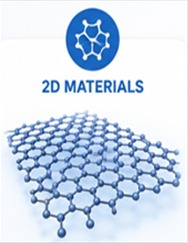 2D Materials
Our group employs first-principles calculations to investigate the electronic, magnetic, optical, and mechanical properties of two-dimensional (2D) materials. Our research focuses on Janus monolayers, MXenes, transition-metal dichalcogenides (TMDs), and 2D perovskites, aiming to elucidate the fundamental physical mechanisms governing their behavior at the nanoscale.
By integrating density functional theory (DFT) with advanced computational techniques, we explore how symmetry breaking, defect engineering, strain modulation, and heterostructure design can be exploited to tailor material properties for next-generation nanoelectronics, optoelectronics, spintronics, and sensing technologies.
Janus Monolayers
MXenes
Transition-Metal Dichalcogenides
2D Perovskites
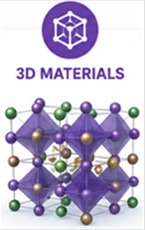 3D Materials
We investigate bulk crystalline materials, including perovskites, double perovskites, Heusler alloys, Zintl phases, and intermetallic compounds, using first-principles calculations. Our research explores their structural stability, electronic and magnetic properties, mechanical behavior, and thermoelectric performance, providing fundamental insights for the rational design of advanced functional materials for energy conversion and spintronic applications.
Heusler Alloys
Perovskites
Zintl Phases
Delafossite
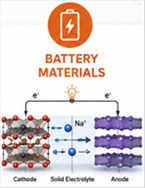 Battery Materials
We investigate electrode and solid-electrolyte materials for next-generation energy storage technologies using first-principles calculations and advanced computational methods. Our research focuses on lithium-, sodium-, potassium-, and magnesium-based solid-state batteries, exploring ion-transport pathways, diffusion mechanisms, electronic properties, interfacial stability, and electrochemical performance to guide the rational design of safer, more efficient, and higher-performance energy storage systems.
Solid-State Batteries
Lithium Solid State Battery
Sodium Solid State Battery
Potassium Solid State Battery
Magnesium Solid State Battery
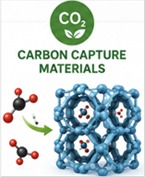 CO2 Capture
We employ computational materials science to investigate defect-engineered transition-metal dichalcogenides (TMDs) for efficient CO₂ capture, storage, and conversion. Our research explores adsorption mechanisms, selectivity, structural stability, and regeneration potential to identify promising materials for sustainable environmental applications. We also investigate strategies for converting CO₂ into value-added chemicals and fuels, supporting emission reduction, climate change mitigation, and the development of a circular carbon economy. This research aims to advance computationally guided materials design for environmentally sustainable and economically viable carbon management technologies.
Defects Engineering in Transition-Metal Dichalcogenides
 Hydrogen Storage
We investigate advanced materials for efficient and reversible hydrogen storage, a key technology for clean energy and sustainable transportation. Using computational materials science, we evaluate hydrogen adsorption and absorption mechanisms, storage capacity, thermodynamic and kinetic stability, and desorption behavior in materials such as metal hydrides, complex hydrides, metal–organic frameworks (MOFs), and carbon-based nanostructures. Our research aims to guide the rational design of high-performance materials for safe, efficient, and reversible solid-state hydrogen storage.
Research Facilities
 MIC Learning and Computation Hub
The MIC Learning and Computation Hub is a collaborative platform dedicated to developing the computational expertise and research capabilities of MIC members. Through hands-on training, peer-led learning, and knowledge sharing, the Hub promotes proficiency in advanced scientific software, first-principles calculations, and computational materials modeling. It fosters a culture of collaboration, continuous learning, and technical excellence, empowering researchers to develop new skills, exchange ideas, and advance scientific innovation.
 WIEN2K
WIEN2k is employed for all-electron first-principles calculations using the full-potential linearized augmented plane-wave (FP-LAPW) method. It enables detailed investigations of electronic structures, magnetic properties, optical responses, and other fundamental properties of crystalline materials.
 VASP
VASP (Vienna Ab initio Simulation Package) is a core computational tool for first-principles materials modeling using density functional theory (DFT). It is utilized to investigate structural stability, electronic and magnetic properties, optical response, mechanical behavior, defects, surface interactions, and energy-related phenomena in advanced materials.
 QUANTUM ESPRESSO
Quantum ESPRESSO is used for first-principles simulations based on density functional theory (DFT) and plane-wave basis sets with pseudopotentials. It supports the investigation of structural optimization, electronic and magnetic properties, phonon dispersion, and other material characteristics.